Apr 27, 2026
Peptides for Hair Growth: What Works, What Doesn’t, and What to Expect
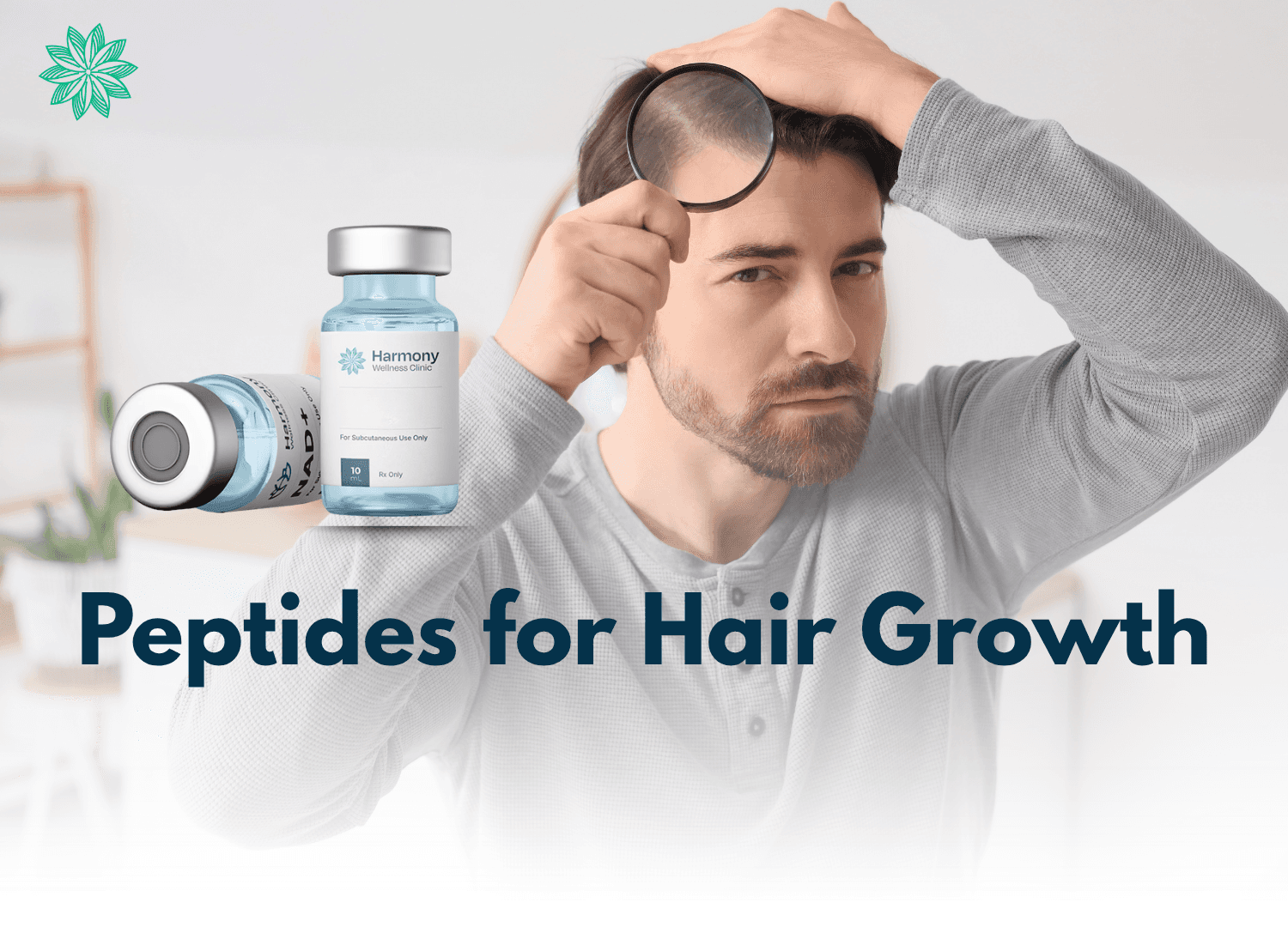
Peptides for Hair Growth: Why So Many People Are Searching This Right Now
Hair shedding and thinning can feel personal fast. One day it’s a little extra hair in the shower drain, and the next you’re noticing a widening part, thinner edges, or a ponytail that feels smaller than it used to.
If you’ve searched peptides for hair growth, you’re likely looking for real solutions that go beyond shampoo recommendations and supplements.
Hair growth is rarely just a “hair problem.”
It’s often driven by one or more root causes, such as:
inflammation around the scalp and follicles
poor circulation to the scalp
hormone shifts (especially in women 35+)
stress and elevated cortisol
nutrient deficiencies (iron, vitamin D, protein)
thyroid dysfunction
post-pregnancy shedding
metabolic stress and insulin resistance
genetic sensitivity to androgens
Peptide therapy is gaining traction for hair growth because certain peptides may support:
scalp health and circulation
collagen and tissue regeneration
inflammation balance
follicle environment and healing pathways
This article will cover:
how hair growth actually works
which peptides are most commonly used for hair growth
what is hype vs what is promising
who is a good candidate
what timeline to expect
how to combine peptides with smart lifestyle support
For a beginner-friendly breakdown of popular peptides and what they’re used for:
✅ Download our FREE guide at thepeptidehandbook.com
How Hair Growth Works:
Hair growth happens in cycles:
1) Anagen phase (growth)
This is when the follicle actively produces hair.
2) Catagen phase (transition)
The follicle slows down.
3) Telogen phase (rest)
The hair stops growing and eventually sheds.
Many hair loss patterns are caused by:
the anagen phase shortening
more hairs being pushed into telogen
inflammation disrupting the follicle environment
circulation issues reducing nutrient delivery
hormonal signals miniaturizing follicles over time
So the most effective plan usually includes:
reducing inflammation
improving blood flow
supporting collagen and tissue health
addressing hormone and nutrient factors
and supporting follicle signaling
What Peptides for Hair Growth Are:
What they are
Peptides for hair growth are peptides used in medical wellness plans to support scalp health and hair follicle signaling.
What they aren’t
They are not an overnight fix, and they cannot override major causes like severe thyroid dysfunction or iron deficiency without addressing those issues too.
The best outcomes happen when peptides are used as part of a full plan that also supports:
labs when indicated
nutrient repletion
stress and sleep
scalp care and consistency
The Most Popular Peptides for Hair Growth
1) GHK-Cu (Copper Peptide): The Hair + Skin Regeneration Peptide
Best for: hair thinning, scalp health, collagen support, tissue repair
If there’s one peptide that shows up most often in “hair growth peptides” searches, it’s GHK-Cu.
GHK-Cu is commonly discussed for:
collagen production support
tissue regeneration
scalp environment support
anti-inflammatory effects that may benefit follicle health
Why people love it
Because it’s not only about hair. Many people also want:
skin quality improvement
collagen support
better healing and recovery
anti-aging benefits from the inside out
Who it’s best for
women 35+ noticing diffuse thinning
postpartum shedding support (once appropriate)
men with early thinning who want scalp support
anyone whose scalp feels irritated, inflamed, or “not healthy”
2) BPC-157: The Healing and Inflammation Support Peptide
Best for: inflammation, healing, gut support that impacts hair
Hair health is influenced by inflammation and gut function more than most people realize.
If gut inflammation, nutrient absorption issues, or systemic inflammation are part of the picture, BPC-157 is often discussed in wellness protocols.
This is especially relevant if you have:
chronic bloating or digestive issues
inflammatory flare-ups
slow recovery and tissue healing
skin issues that track with gut symptoms
3) KPV: Inflammation Balance for Gut + Skin and Scalp
Best for: inflammation-driven scalp issues
KPV is commonly discussed for inflammation balance and gut and skin support.
If your scalp is sensitive, itchy, or reactive, addressing inflammation can be a major part of hair support.
4) NAD+ Support: Energy and Cellular Repair
Best for: fatigue and cellular aging patterns
While NAD+ is not always discussed as a “hair peptide,” many people include it in longevity-style protocols that support overall cellular repair and resilience, which can indirectly support hair health when fatigue and aging factors are present.
What Works and What Doesn’t
What works
✅ consistent protocols for at least 8 to 12 weeks
✅ addressing inflammation and nutrient status
✅ supporting scalp circulation and tissue health
✅ pairing with PRP hair restoration when appropriate
✅ staying consistent even when shedding fluctuates early on
What doesn’t
❌ stopping at 2 to 3 weeks
❌ relying only on one product without addressing root causes
❌ skipping protein and nutrient support
❌ ignoring stress and sleep
❌ buying random “research peptides” online
What Results to Expect and Timeline
Remember that hair growth is slow. That’s normal!
Weeks 1 to 4
scalp feels calmer
less irritation for some
shedding may fluctuate
Weeks 6 to 12
improved hair quality
less breakage
early signs of improved density for some people
Months 3 to 6
more visible thickening
improved fullness
stronger growth patterns
The best results often come from layering:
peptides
PRP hair restoration
supplements when needed
and consistency
FAQ: Peptides for Hair Growth
Do peptides regrow hair?
They may support the environment needed for hair growth, but results vary by cause of hair loss and consistency.
Is GHK-Cu the best peptide for hair growth?
It is one of the most commonly discussed options, especially when hair thinning overlaps with collagen and inflammation issues.
Can I do this through telehealth?
Yes. Many peptide protocols can be prescribed through telehealth when appropriate. You can book a consult online 24/7 at harmonywellnessclinic.com
How long until I see results?
Expect at least 8 to 12 weeks, with best results often in 3 to 6 months.
Ready to Support Hair Growth with a Medical Plan?
Book now at harmonywellnessclinic.com
Text 918-779-0642 for a full price list
And do not forget your free guide: Download the Peptide Handbook at thepeptidehandbook.com